
Vulnerability to Climate Change in the Context of Gender
Vulnerability to Climate Change in the Context of Gender
By Sammie Trvalik, Earth Forward Group
During this women’s history month 2022, as climate change reaches record threat levels and women recover from the disproportionate burden of the Covid-19 pandemic, it is imperative to recognize the intersection between gender and vulnerability to climate change.
Research supports that those who are historically disenfranchised suffer the most from climate change and environmental degradation, the central tenement of environmental justice. The fundamental idea is that if a certain identity makes it hard to thrive in broader society, those trends will carry through to the climate crisis. Gender inequality has historically burdened women and girls with a number of socioeconomic obstacles — with a particularly blatant pattern among women of color and women who live in poverty. Rectifying these underlying inequalities is crucial in adapting to and mitigating the impacts of climate change in an equitable manner.
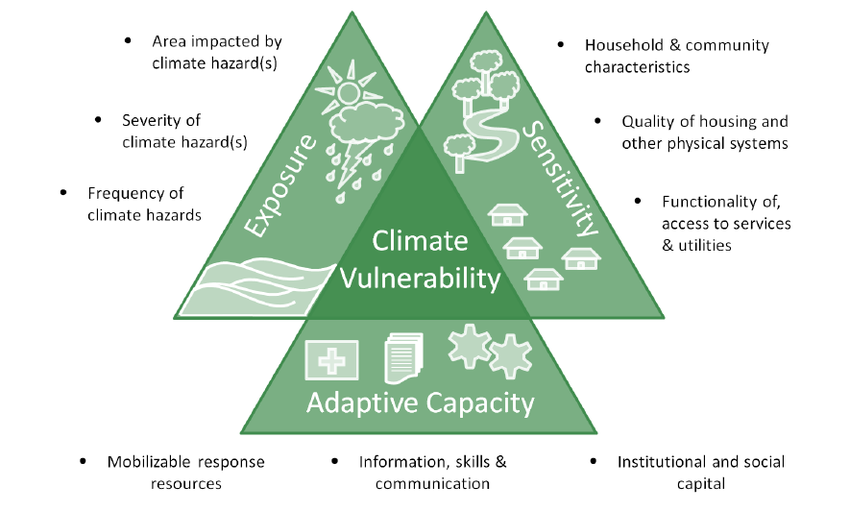
The Climate Vulnerability Index (CVI) estimates relative vulnerability to climate change based on three parameters; exposure to variable natural disaster and climate events, physiological sensitivity (quality of food and water, and general health status), and adaptive capability based on socio-demographic profile, livelihood, and community support/social network. In the context of the CVI, women tend to have less autonomy over their health/safety, finances, and community, limiting their adaptive strategies to climate change. The Refugee Law Project states that women and girls “a) represent the majority of the world’s poor, b) are disproportionately dependent on natural resources, c) have limited access to and ownership of land and other essential natural resources, d) have lower income, e) fewer opportunities, and f) are victims of systemic violence.”
Climate change is a glaring public health crisis, jeopardizing the core necessities of human life; food, water, air and shelter. Exposure to extreme weather events, air and water pollution, food and water-borne or zoonotic disease (such as Covid-19), and poor quality or scarce food are as threatening as they are prevalent in the age of unremediated climate change.
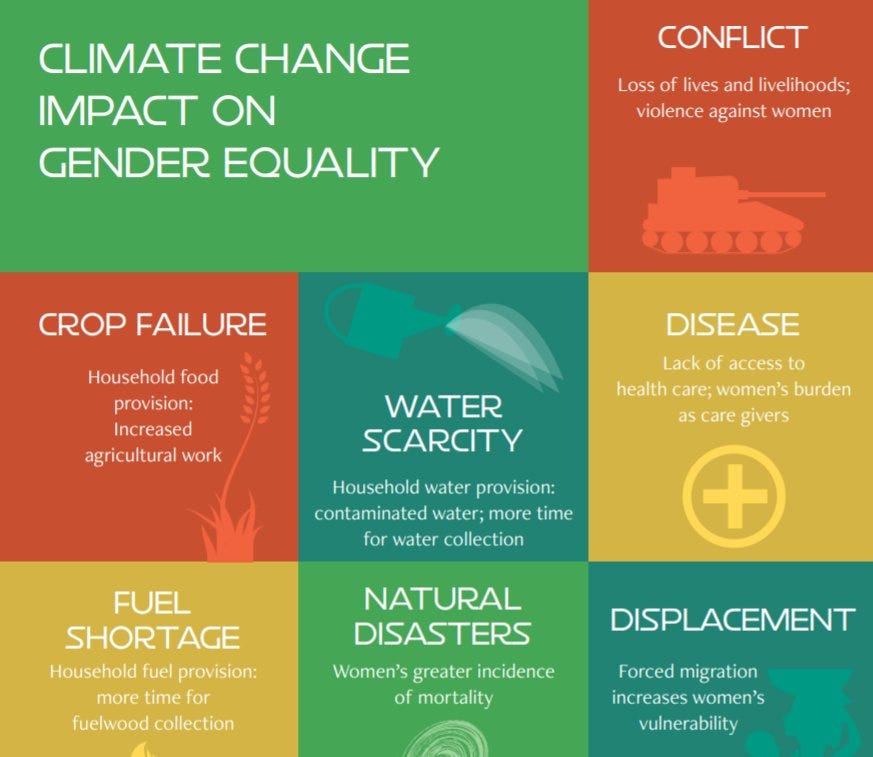
Women in particular tend to face negative health impacts due to climate change and environmental degradation at greater severity and frequency. Women are more likely to live in poverty and in overcrowded and under-resourced housing with a lack of access to air conditioning and fresh water, increasing their exposure to extreme heat and the consequential health impacts of heat illness, such as respiratory and cardiovascular disease, and poor reproductive health and birth outcomes. Those in poverty are also more likely to live in metropolitan or urban areas, with poor air quality and where the heat island effect increases ambient temperatures.
Natural disasters also threaten the reproductive health of women; increase obstacles to family planning services, stable shelter, and economic opportunity; and increase rates of domestic violence and displacement.
Further, outdated narratives of overpopulation have wrongly targeted women as a source of anthropogenic climate change. Methods of population control around the world unjustly control the right of women to have a family. In reality, many women lack the family planning resources and services, and financial freedom, to remain autonomous over their child-bearing decision. Moreover, it is the action of wealthy, western, industrialized countries that contribute to the vast majority of our global environmental footprint.
All the while, women are leading the climate movement and hold the unique perspectives and knowledge necessary to navigate the climate crisis, according to an article from One Earth.
“…refugee women possess commendable traditional skills in water harvesting, storage, food preservation, rationing and natural resource management alongside inherited wisdom and knowledge on early warnings, mitigation of impacts of climate disaster and response. From reforestation and afforestation to waste management to the pursuit of clean and renewable energy, among others, women and girls are relentlessly pursuing proactive measures towards adaptation, mitigation, and response.”
— Refugee Law Project
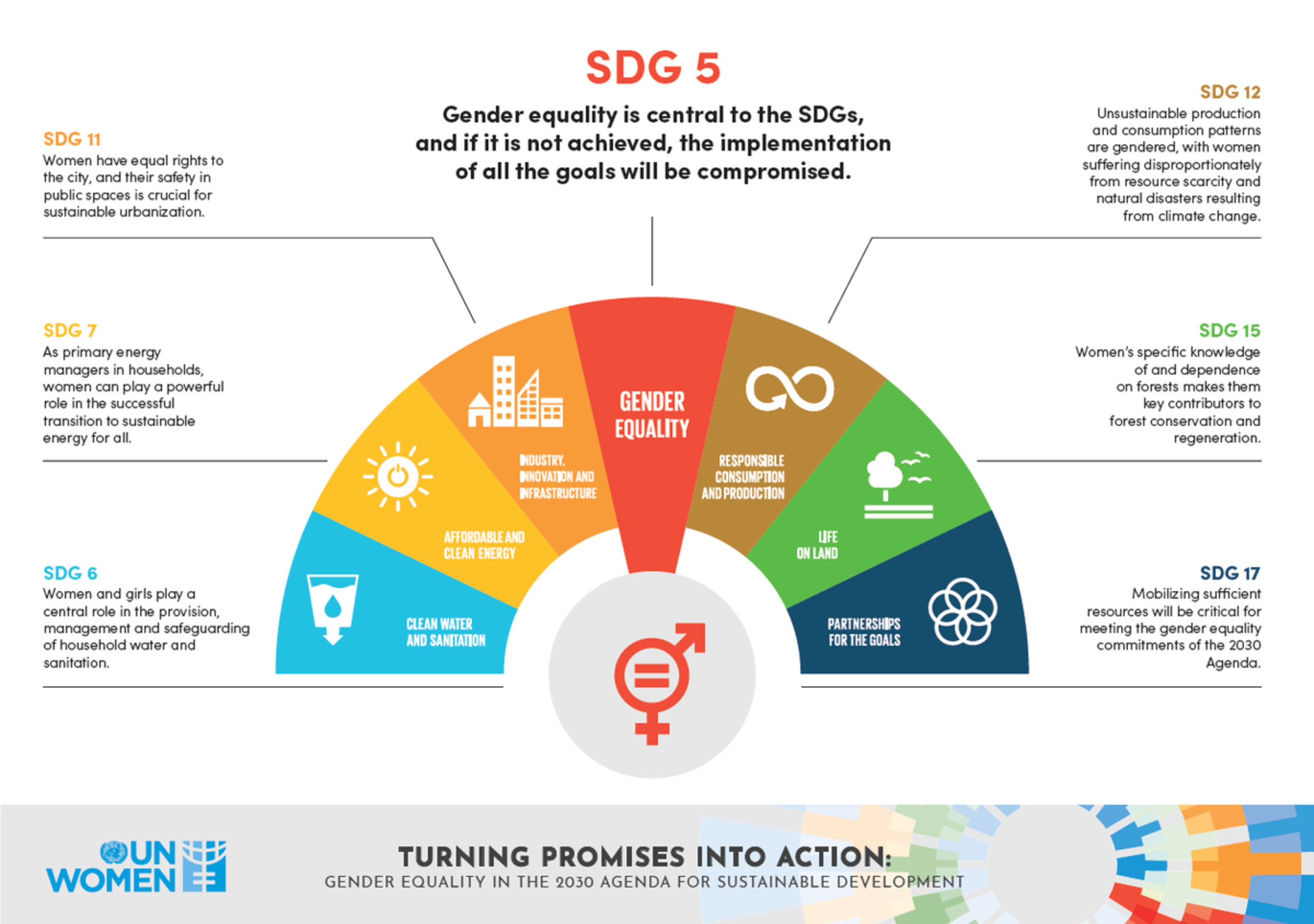
The sustainable development goals (SDGs) list gender equality as one of 17 elements to ending poverty, protecting the planet, and ensuring prosperity for all. The 2011 Women at the Frontlines of Climate Change: Gender Risks and Hope assessment from the UN Environment Programme (UNEP) provides recommendations to translate this vision into tangible action. Briefly, this includes;
- Designing programs to support women in agriculture and ensuring the right to land and nutritious, accessible food
- Investing in gender sensitive and culturally appropriate green technology and systems that reflect the needs of women
- Analyzing climate change from a gender and development equity perspective in the context of power-relations to increase the knowledge base in this area
- Enabling the participation of women in the decision-making processes of local, community, national, regional and international programs and bodies.
- Ensuring that educational programs address the risk of gender-based violence and trafficking in high-risk and disaster-prone areas
Remedying the underlying social inequalities that leave women particularly vulnerable to the impacts of climate change is no simple or straightforward task, but it starts with recognizing the patterns in the first place, and building space to involve the perspective of women in climate planning.